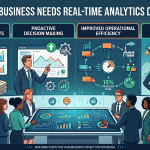








Building Executive Dashboards for Better Decisions
Businesses collect more data than ever before.
Sales activity, website traffic, advertising performance, customer behavior, financial results, support requests, and operational workflows all generate valuable information.
But collecting data is not the same as using it.
Many companies have access to dashboards, spreadsheets, CRM reports, and analytics tools, yet still struggle to turn those numbers into meaningful decisions.
The real value of business data comes from understanding what it means and using it to take action.
Turning data into actionable insights helps companies identify problems earlier, improve performance, allocate resources more effectively, and make better strategic decisions.
What Is an Executive Dashboard?
An executive dashboard is a high-level reporting interface designed to give business leaders a clear view of company performance.
Unlike detailed departmental dashboards, executive dashboards focus on the metrics that matter most to strategic decisions.
These may include:
- Revenue
- Profitability
- Sales pipeline
- New leads
- Conversion rates
- Customer acquisition cost
- Marketing performance
- Customer retention
- Operational efficiency
- Cash flow
- Project performance
The goal is not to display every available data point.
The goal is to give leadership the information needed to understand what is happening across the business.
Start With Business Goals
The most important step in building an executive dashboard is deciding what the business is trying to achieve.
A dashboard should be connected directly to company objectives.
For example, if the priority is revenue growth, executives may need visibility into:
- New sales opportunities
- Pipeline value
- Close rate
- Average deal size
- Revenue by service